Anker Prime Charging Base Review: The Problem With Anker's Best Charging Dock
Some of the links in this post are affiliate links, which means I may earn a small commission if you choose to make a purchase at no extra cost to you. As an Amazon Associate, I earn from qualifying purchases. Read my full Ethics & Affiliate Relationship Disclaimer.
The Anker Prime Charging Base is one of those accessories that feels incredibly slick when it fits your setup, but it is not an automatic recommendation for every Prime power bank owner. The magnetic dock makes charging ridiculously simple, it supports fast power delivery, and the app integration is genuinely useful. At the same time, there are some frustrating limitations that keep it from being the perfect charging hub.
Table of Contents
What Is the Prime Charging Base?
The Prime Charging Base is a magnetic charging dock built specifically for compatible Anker Prime power banks. Plug the base into wall power, stand a supported power bank on top, and the pogo pin connector on the bottom makes contact automatically. No USB-C cable is needed to recharge the power bank.
That magnetic alignment is the main reason to buy it. It is easy to drop a power bank onto the dock, grab it when needed, and replace it with another one. The base also includes side ports for charging other devices, so it can serve as a compact desk charging station rather than only a dedicated power bank dock. You can find the Anker Prime Charging Base here.
What’s New in This Version
This is the updated version of Anker’s original Prime Charging Base. The previous model delivered up to 100W through its pogo pin connector. This version raises that figure to 150W, but only with the largest compatible Prime power bank.
It is also backward compatible with earlier Prime models and adds Bluetooth support for the Anker app. There is a small front indicator light that confirms the base is powered and active, but otherwise the base is very understated. The important detail is that the 150W upgrade does not automatically mean every Prime power bank charges at 150W. Power bank compatibility and input limits still determine the real charging speed.
Ports and Power Output
Along with the pogo pin dock on top, the Prime Charging Base has three ports on its side:
USB-C 1: Up to 140W
USB-C 2: Up to 100W
USB-A: Up to 22.5W
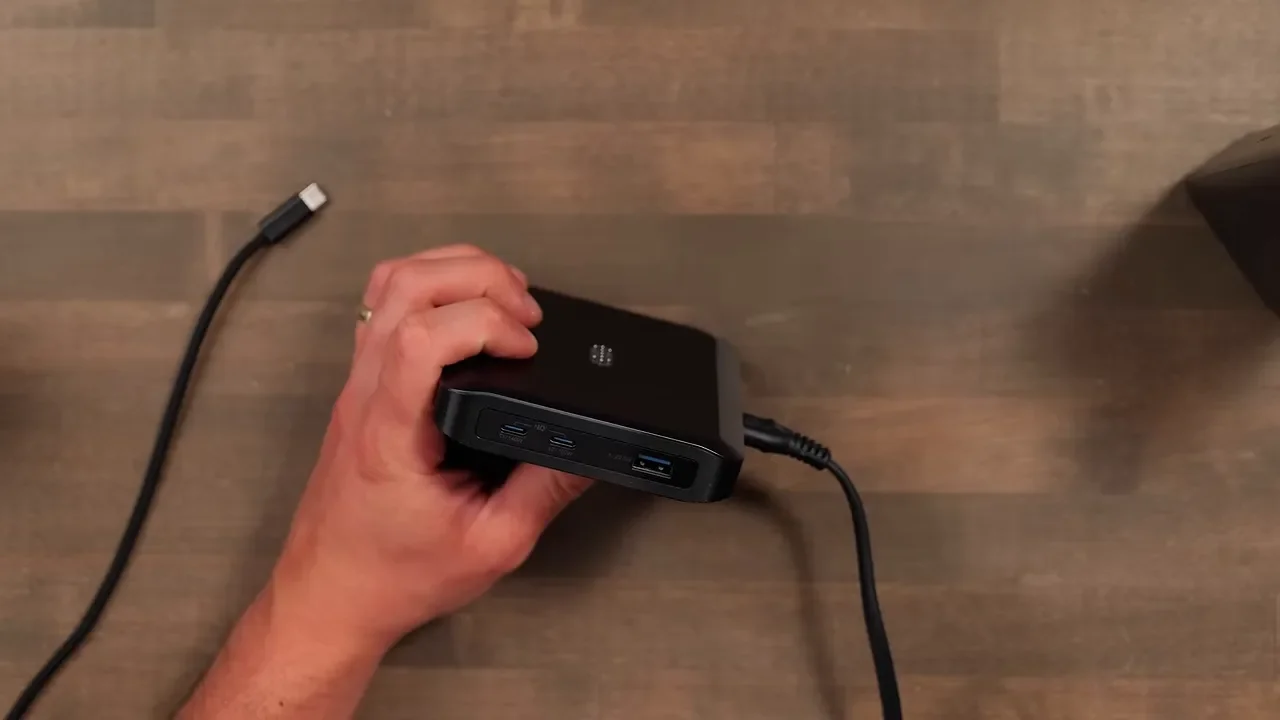
The pogo pin connector supports up to 150W, but that full speed is reserved for the largest Prime model with the updated connector design. Smaller compatible Prime power banks top out at lower input rates, leaving more available power for the USB ports on the side. When multiple USB ports are in use, the available 150W output is shared between them. That makes this a capable multi-device charger, but it also leads directly to one of the base’s biggest frustrations: there is no way to control exactly how that power gets divided.
Charging Speed by Power Bank Model
Anker’s published charging figures give a good idea of what to expect when taking a compatible Prime power bank to 80%:
130W Prime Power Bank: About 28 minutes, limited to 65W input
200W Prime Power Bank: About 48 minutes
220W Prime Power Bank: About 48 minutes
Older 27,000mAh 250W Prime Power Bank: About 40 minutes
New 300W Prime Power Bank: About 33 minutes
The new 300W Prime Power Bank is the one that benefits most from the charging base because it supports the faster 150W pogo pin input. In real-world use, the base does a great job keeping these power banks charged and ready to go, especially when you are cycling through more than one. For anyone building out the larger Prime setup, the Anker Prime 220W Power Bank and the Anker Prime 300W Power Bank are the models most worth considering alongside the base.
Testing With the Anker App
The Bluetooth connection and Anker app are one of the better parts of this updated base. The app can show live power data for the docked power bank and for connected USB devices. For example, the app can show power going to a USB-C device while also showing the docked power bank receiving power. It also provides a live chart that tracks output over time, which is useful if you care about seeing how the charging base is allocating power as devices ramp up or slow down.
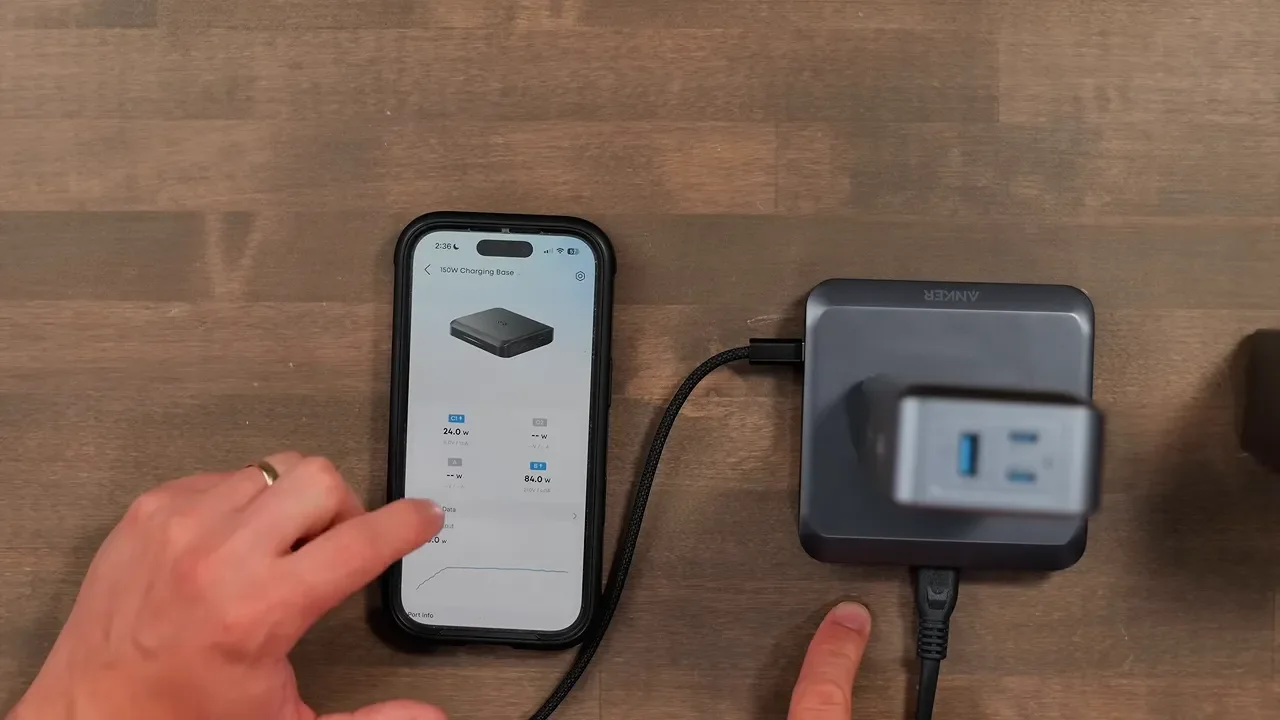
You can also check which ports are active and follow the real-time data for each connected device. It works with the pass-through charging capabilities found in the Prime power bank lineup, so the base can remain part of a flexible charging setup.
Missing Wattage Display
For all the app functionality, it is still disappointing that the Prime Charging Base has no built-in screen. A small display showing live wattage for the pogo connector and each USB port would make this much easier to use at a glance. You can check the screen on a docked Prime power bank, or pull out your phone and open the Anker app. Both options work, but neither is as convenient as having the information directly on the charging base itself.
Power Sharing Limitations
This is the biggest functional problem with the Prime Charging Base. You cannot reserve a specific amount of power for the docked power bank when something is connected to a USB port. Say the 300W Prime Power Bank is on the dock and an iPad is plugged into USB-C. Ideally, it would be great to tell the base to reserve 125W for the power bank and send the remaining 25W to the iPad. That is not an option.
Instead, connecting another device causes the base to throttle power to the docked power bank automatically. The charging power is shared, but there is no app setting to prioritize the power bank or manually assign wattage to a connected device. That is especially annoying because Anker’s Prime power banks offer more control over port priority themselves. The charging base has Bluetooth and app support, so it feels like it should offer the same kind of control.
What I Like About It
The convenience is absolutely the highlight here. Setting the power bank onto the magnetic dock is clean, quick, and satisfying. It aligns itself properly, charges without cable clutter, and makes it easy to grab a fully charged battery on the way out.
There are a few things the base does really well:
Magnetic pogo pin charging: No need to plug and unplug a USB-C cable every time.
Fast charging: Most supported Prime power banks can reach 80% in less than 50 minutes.
Extra ports: The two USB-C ports and USB-A port can charge devices that are not connected to the power bank.
App monitoring: Live charging data and usage graphs are a nice bonus for power users.
Easy swapping: It is great for keeping several compatible Prime power banks topped off through the day.
If you own multiple Prime power banks, this really does make a lot of sense. Put one on the dock, take it when needed, then drop the next one in its place. That workflow is hard to beat.
Biggest Drawbacks
The lack of adjustable port priority is the biggest issue. The base decides how to share its power, and there is no way to tell it that the docked power bank should receive a certain wattage before the USB ports take their share. The missing live wattage display is another frustrating omission. The information is available through the app, but a physical screen would make the product feel much more complete.
Compatibility is also limited. The magnetic pogo pin feature only works with supported Anker Prime power banks. If you have an Anker laptop charger or another USB-C charging product, it must connect through one of the side USB ports. The base can handle it, but you lose the main benefit of the dock.
Price and Bundle Deals
At $100 by itself, the Prime Charging Base is expensive for what is essentially a charging dock. The magnetic convenience and app connectivity are nice, but the price is tough to justify if you only own one compatible power bank and do not use it constantly.
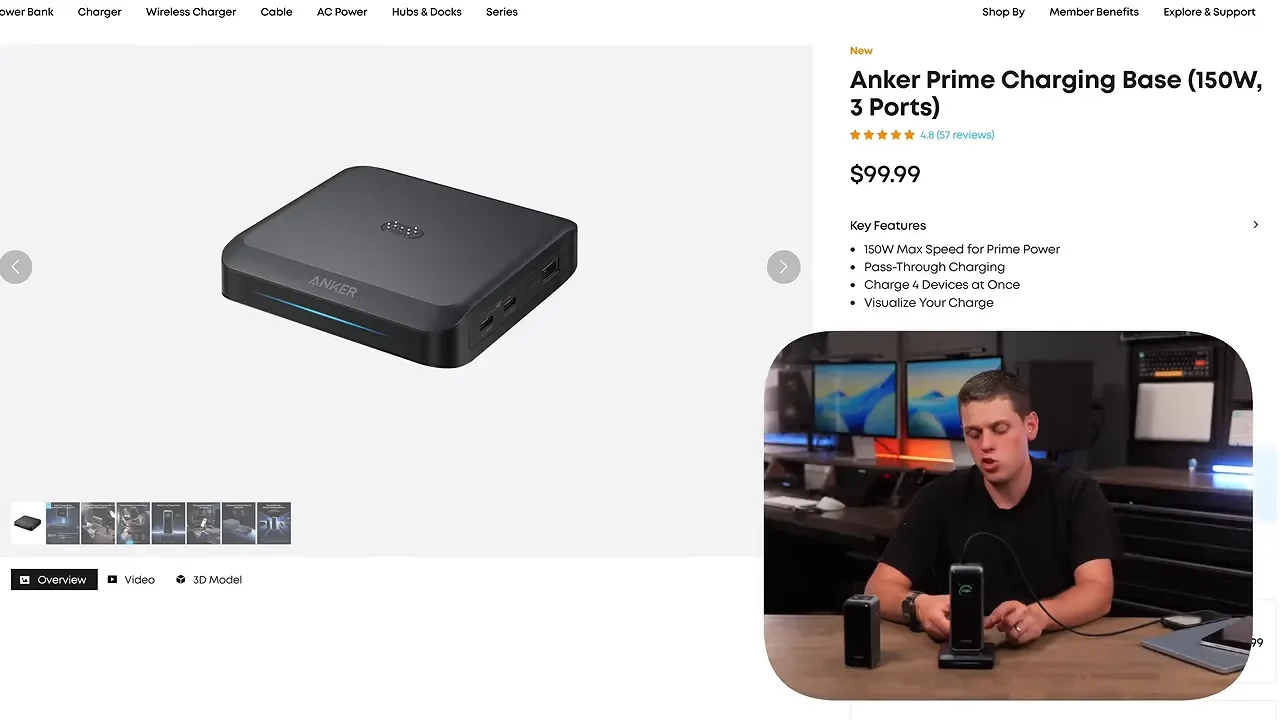
The better time to buy it is alongside a larger Prime power bank. Bundles with the 220W or 300W models can typically bring the base down to around $60 to $80, which makes the value proposition much better. At that bundle price, the base feels more like a useful convenience upgrade. At $100, it feels more like a luxury accessory for people who really want the cleanest possible charging setup.
Better Alternative: Anker 200W Charger
Before buying the Prime Charging Base, I would seriously consider an Anker 200W six-port charger. It typically costs around $80, gives you more ports, and can actually charge some Prime power banks faster when they support dual USB-C input. The 300W Prime Power Bank, for example, supports up to 250W of charging input through its USB-C ports. You cannot hit that top speed through the pogo pin connector. To reach it, you need to use the USB-C inputs on the power bank instead.
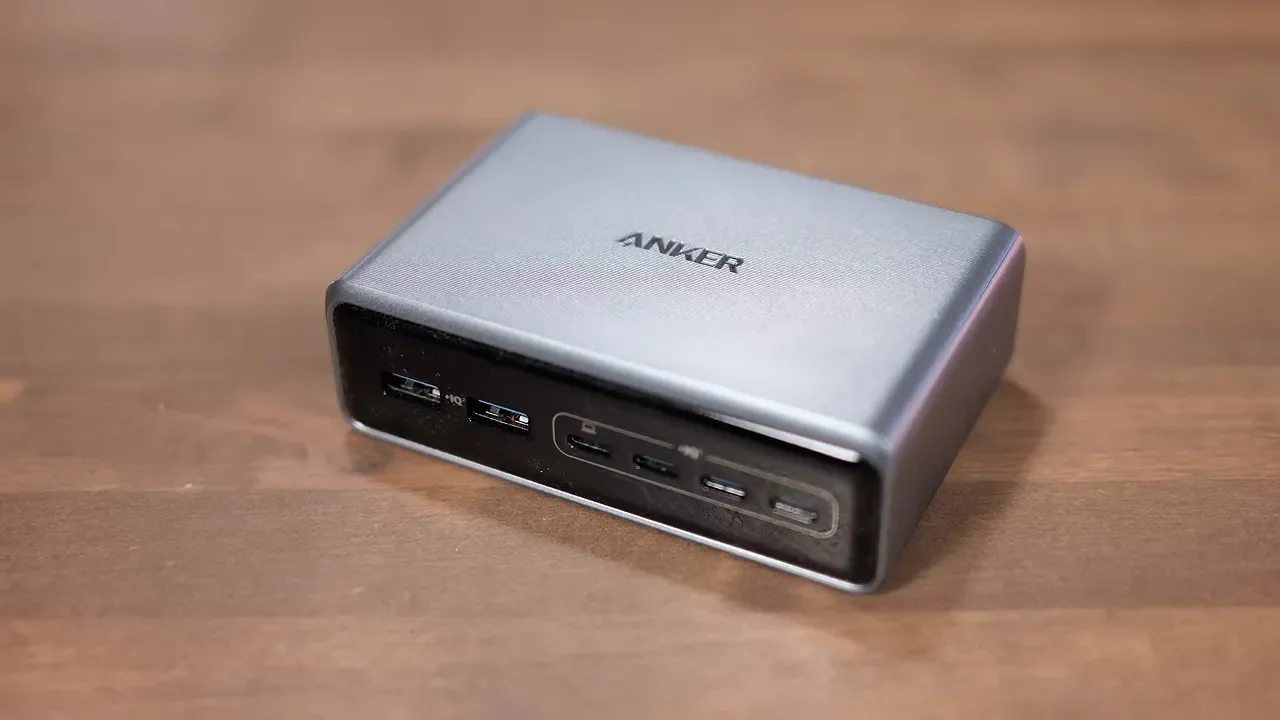
The tradeoff is straightforward:
Prime Charging Base: Magnetic dock, app support, cleaner setup, easier power bank swapping.
Anker 200W charger: More ports, lower price, and potentially faster charging for supported power banks.
If fast multi-port charging matters more than the magnetic dock, the Anker 200W six-port charger is the smarter option.
Who Should Buy This
The Prime Charging Base makes the most sense for someone who already owns a compatible Anker Prime power bank and constantly cycles through it. If it lives on a desk, gets used every day, or you have multiple Prime power banks to rotate, the convenience adds up quickly.
It is especially good for anyone who wants a clean desktop setup. Drop the power bank on the base, walk away, and come back to a charged battery. No cable hunting, no unplugging, and no fumbling with connectors. I would skip it if you only occasionally charge a Prime power bank, need maximum charging speed from a 300W model, or want more charging ports for the money. A high-output USB-C charger makes more sense in those situations.
Final Verdict
The Anker Prime Charging Base is a very convenient accessory with a few obvious missed opportunities. The magnetic pogo pin design is excellent, the 150W output is useful with the largest compatible power bank, and the Anker app gives you genuinely helpful live charging data. But it should have a built-in wattage display, and it absolutely should let you set port priorities through the app. At $100, those omissions are hard to ignore.
If you get it in a bundle with a 220W or 300W Prime Power Bank, or if you value a clean cable-free desk setup above everything else, it is easy to recommend. Otherwise, the 200W six-port charger is likely the better value and may even charge your power bank faster.