Philips Hue Bloom, Iris, And Go Smart Lamp Comparison: Which Should You Buy?
Some of the links in this post are affiliate links, which means I may earn a small commission if you choose to make a purchase at no extra cost to you. As an Amazon Associate, I earn from qualifying purchases. Read my full Ethics & Affiliate Relationship Disclaimer.
The Philips Hue Bloom, Go, and Iris all live in a very similar price range, and at first glance they can feel almost interchangeable. They are all compact Philips Hue White and Color Ambiance lamps, they all support full color, and they all give you tunable white light ranging from a very warm glow up to a cooler daylight tone.
But once you get past the basics, these three lamps start to separate pretty quickly. One is all about flexibility, one is best if you want the smallest footprint, and one is clearly the statement piece of the group. If you are trying to decide between them, here is the easiest way to think about it.
Table of Contents
What These Three Hue Lamps Have In Common
All three lights support app control over Bluetooth, and all three can also connect through the Philips Hue Bridge using Zigbee. If you only want local control in your home, Bluetooth can be enough. If you want remote access while away from home, the Hue Bridge is the piece that unlocks that.
These are also all White and Color Ambiance models, so you are getting:
Full RGB color lighting
Warm to cool white light
A color temperature range from 2200K to 6500K
Integration with the broader Hue ecosystem
So this is not a case where one model is color capable and another is not. The real differences come down to brightness, size, design, power options, and how you actually plan to use the lamp day to day.
Brightness Differences Are Small, But They Are There
On paper, the Iris is the brightest at 570 lumens. The Go comes next at 520 lumens, and the Bloom lands at 500 lumens. That may sound like a meaningful spread, but in actual use the gap is not huge. Still, the Iris does come across as the brightest of the three, especially when the lamps are side by side. If maximum output matters to you, the Iris has the edge. If it does not, the Bloom and Go are close enough that brightness alone probably should not make the decision.
Power Options: This Is Where The Go Pulls Ahead
The biggest functional difference in this group is power.
Bloom must stay plugged into a wall outlet
Iris must also stay plugged into a wall outlet
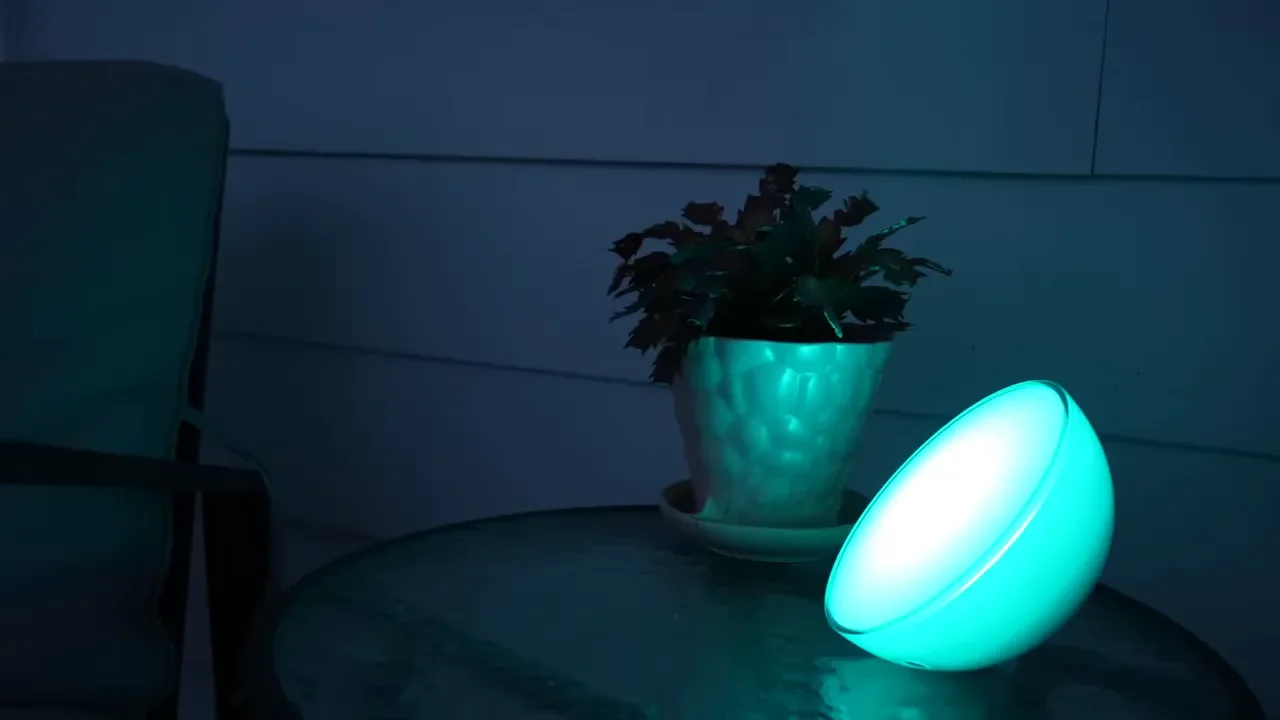
Go can run plugged in or on internal battery power for up to about three hours
That battery changes the whole personality of the Hue Go. It means you can move it from a shelf to a side table, set it on a coffee table, carry it to a back porch, or use it temporarily during a power outage. Even if you mostly plan to leave it in one place, having that option makes it much more adaptable than the other two. That is why the Go feels like the most versatile choice in the lineup.
Size And Footprint
If space is limited, the dimensions matter more than you might expect.
Iris is the largest, with a lens around 7 inches across
Go comes in at about 6 inches
Bloom is the smallest at about 5 inches
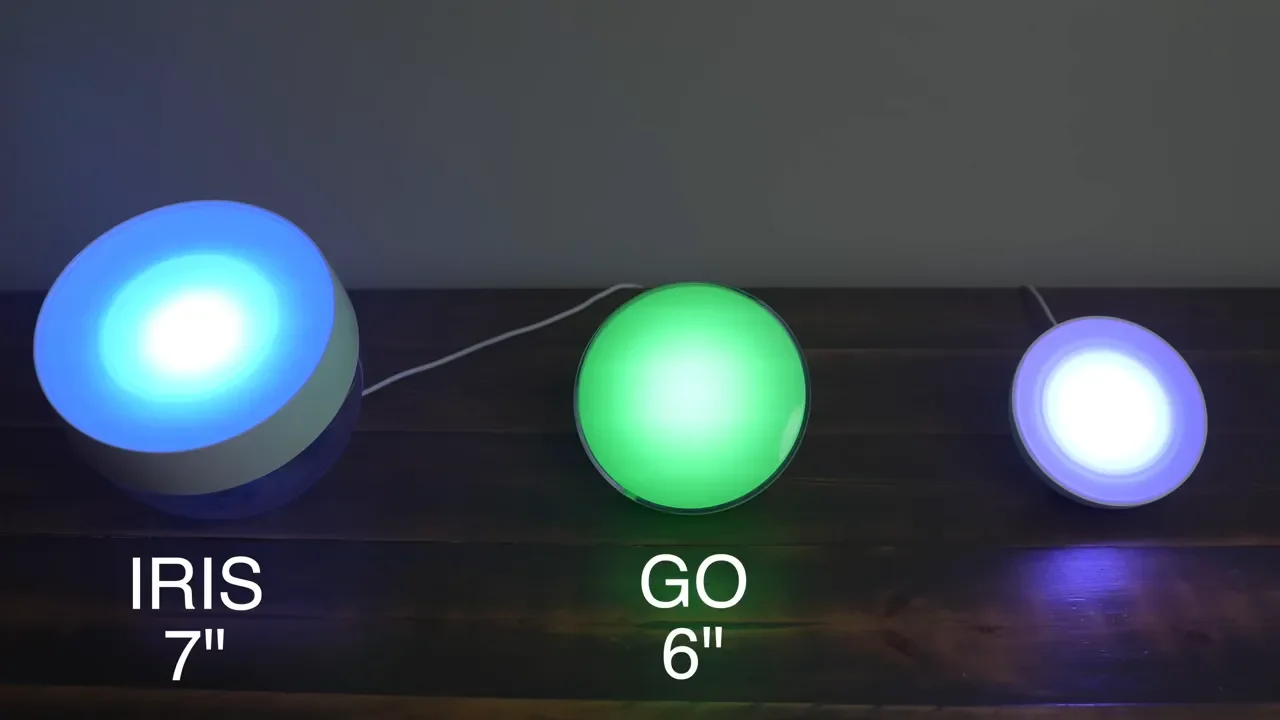
The Bloom is the easiest to tuck into a tight spot. The Go still stays fairly compact, while the Iris needs more breathing room and feels more intentional as part of the room setup. If your top priority is simply getting a small Hue accent lamp somewhere discreet, the Bloom has a clear advantage.
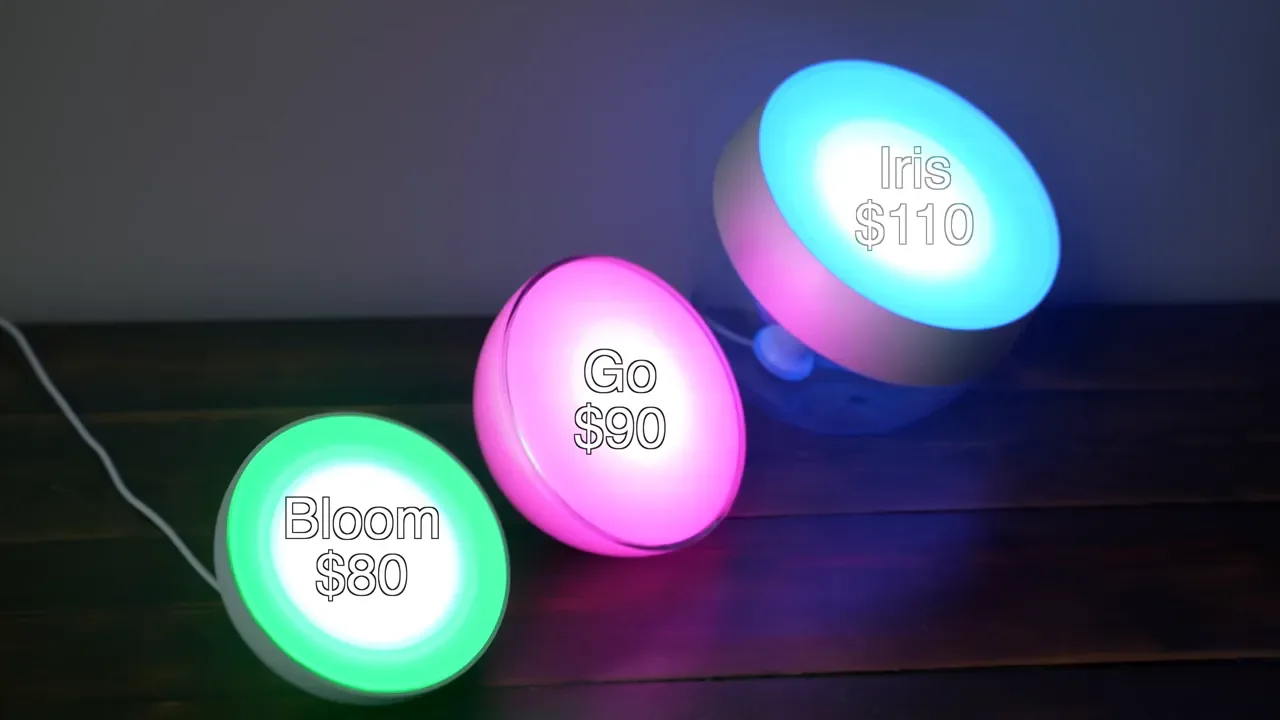
The Iris can also be found in finishes like copper, gold, and silver, but those versions jump significantly higher in price. The big thing here is that the Go is only about $10 more than the Bloom. For that small bump, you get battery capability and more placement flexibility. That value difference is hard to ignore.
Design Differences Matter More Than The Specs
All three lamps send their primary light out through the top lens, and they are generally designed to sit at roughly a 45 degree angle. The Go has one extra trick though. It can also sit flat and point straight upward. That adds another layer of flexibility for uplighting walls, corners, or ceilings.
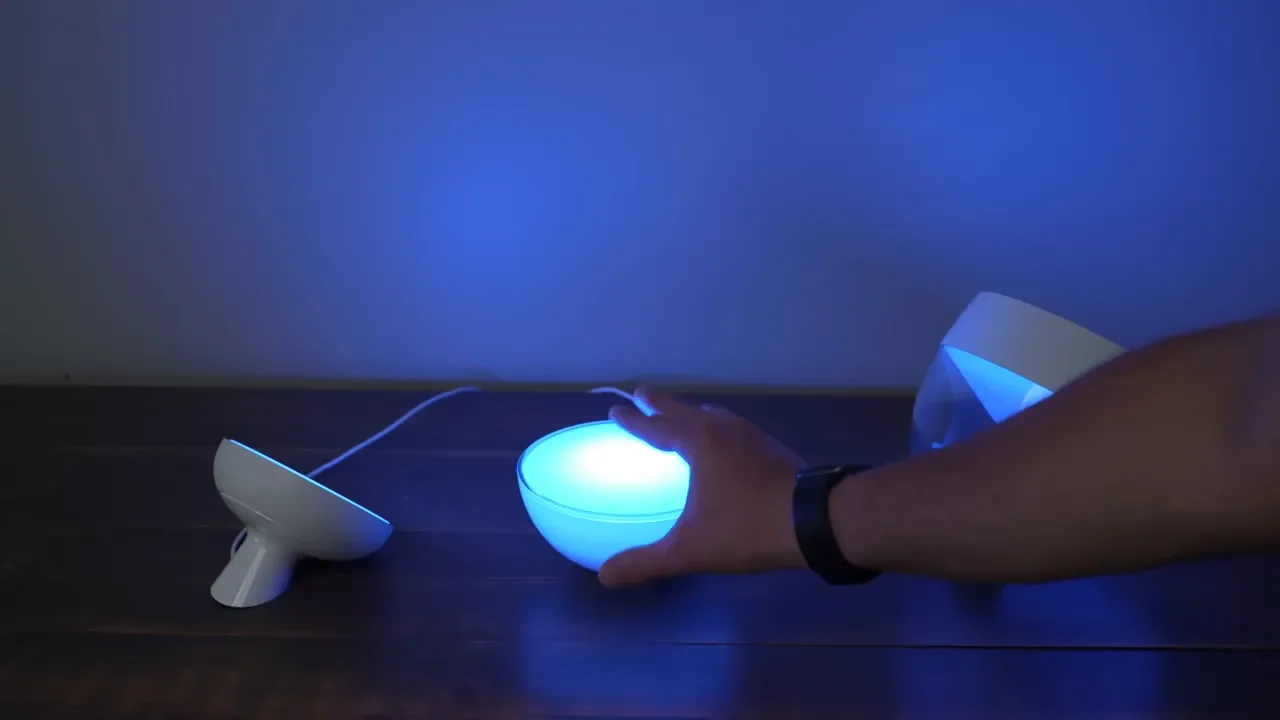
Each lamp also handles the rear of the fixture differently:
Bloom has a solid back
Iris has a transparent back with a translucent inner element
Go has a translucent frosted rear section
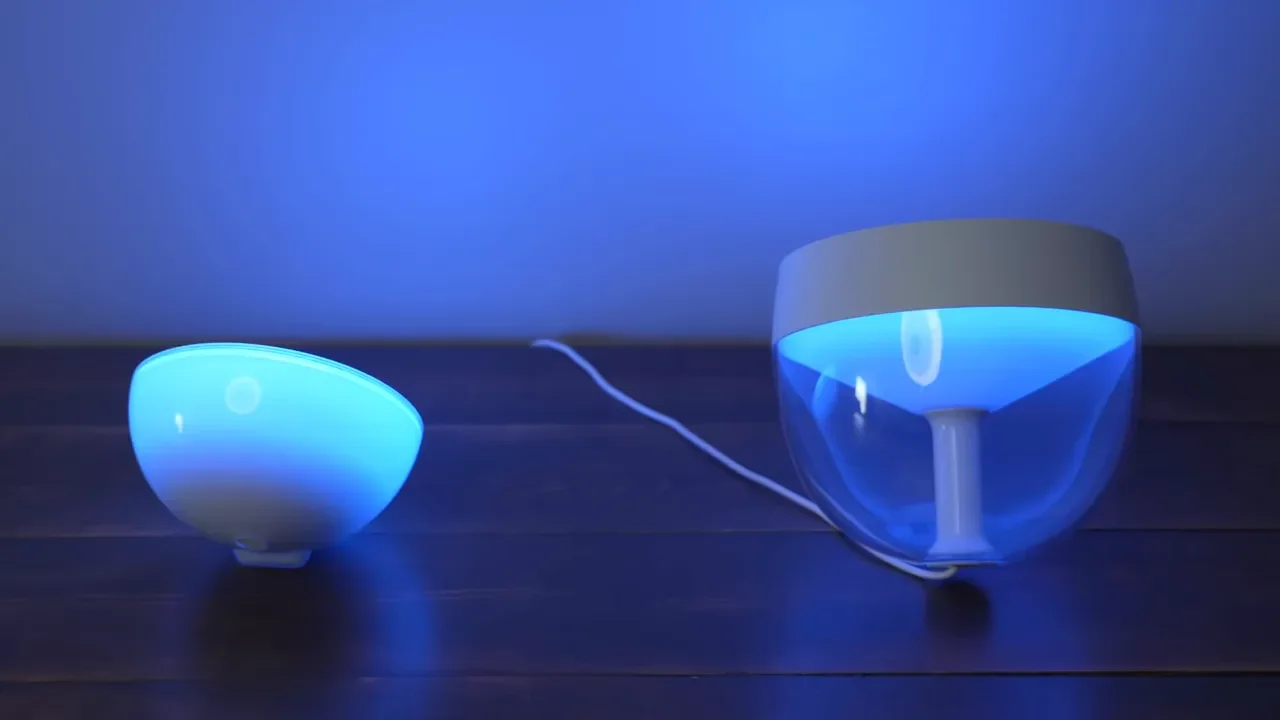
That makes the Bloom behave more like a directional spotlight. Most of the visual impact is coming from the front. The Go and Iris are more decorative as fixtures themselves because the lamp body also glows. That added halo effect makes them feel more ambient and more premium in a room, even if the materials are still mostly plastic.
Build Quality And Feel
All three lamps are plastic, but they do not feel exactly the same. The Bloom gives off the most durable impression, partly because the back feels more solid and almost metallic. The Iris, despite being the most eye catching, actually comes across as the least premium in hand. That likely has a lot to do with the large transparent shell. The Go sits somewhere in between. It has a neat frosted look and a design that feels purpose built for moving around. So if you care about visual style above all else, the Iris wins. If you care about a tougher, simpler feel, the Bloom may surprise you.
How Each Lamp Looks In A Room
All three can work facing outward, aimed at a wall, or tucked into a corner for reflected light. The difference is in the effect they create.
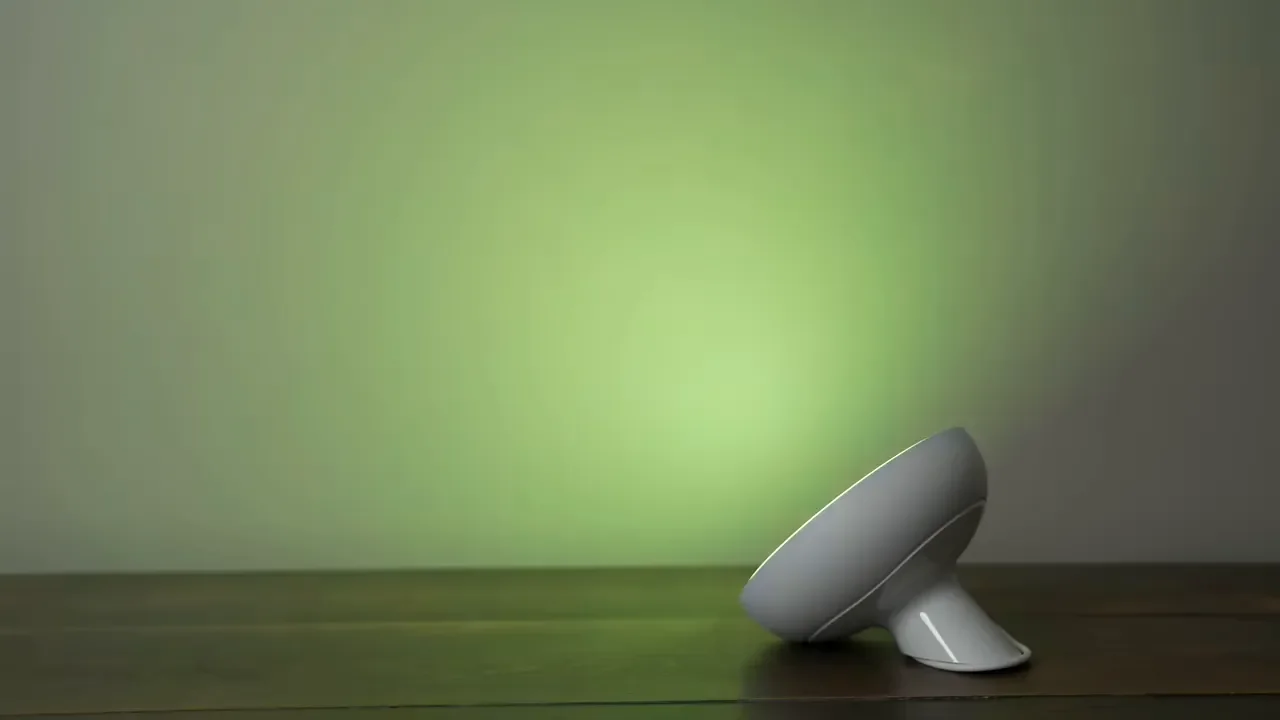
Hue Bloom
The Bloom is the most focused. Since light mainly exits in one direction, it works best as a compact accent spotlight. If you want a small lamp that stays visually understated and throws light where you point it, the Bloom does that well.
Hue Go
The Go feels the most adaptable. It can angle light outward, sit upright, move between rooms, and even leave the outlet for a while. It is the easiest of the three to use casually, whether that means on a bookshelf one day and on a patio table the next.
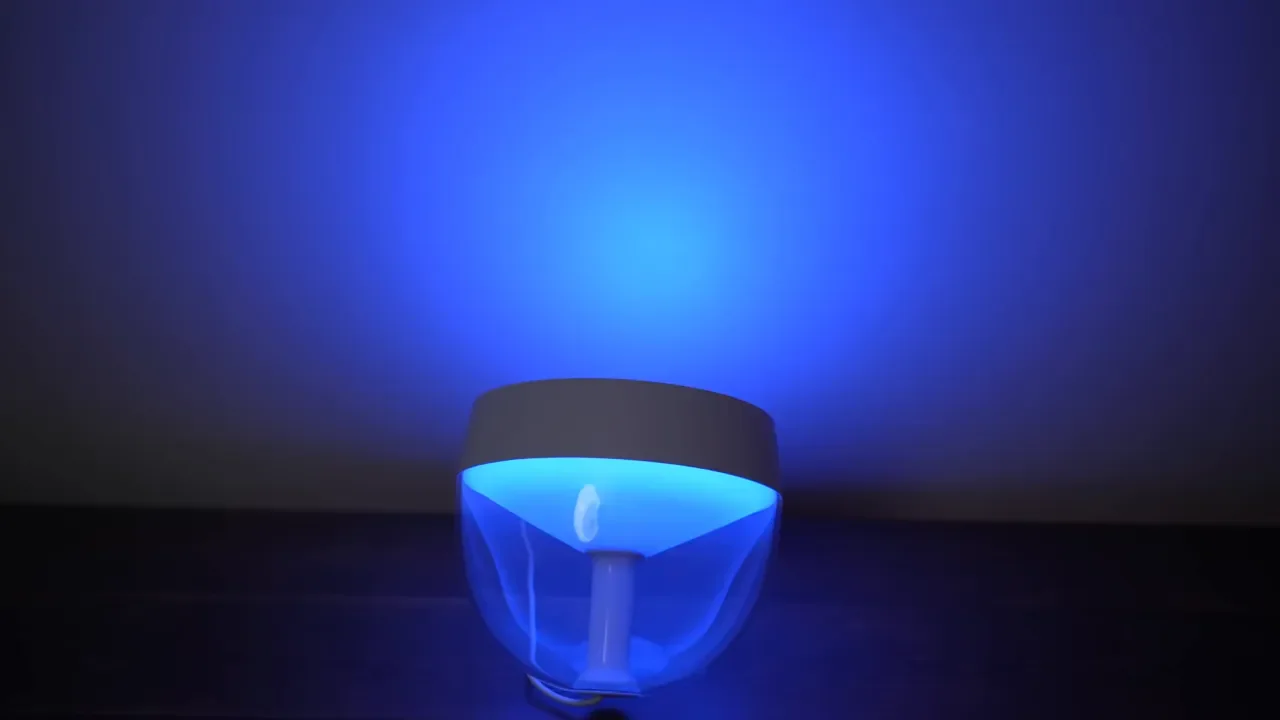
Hue Iris
The Iris is the most decorative by far. The whole fixture changes character with the light color, which makes it feel less like a basic smart lamp and more like a display piece. That is really the Iris selling point. It is not just lighting the room. It is part of the room design.
Which One Should You Buy?
Here is the short version.
Buy The Philips Hue Bloom If You Want The Smallest Lamp
The Bloom makes the most sense if:
You want the smallest footprint
You do not care about battery power
You prefer a solid back instead of a glowing translucent shell
You want a more direct spotlight style effect
It is the dimmest of the three, but only slightly. The bigger tradeoff is that, at this price, it does not offer the flexibility that the Go does.
Buy The Philips Hue Go If You Want The Best Balance
This is the easiest lamp to recommend.
The Go makes sense if:
You want battery power
You like the option to move the lamp around
You want multiple placement angles
You want the best value in this group
For only a small price increase over the Bloom, the Go adds the feature that changes how useful the lamp can be in real life. If versatility is the goal, this is the one.
Buy The Philips Hue Iris If You Want A Statement Light
The Iris is the one to choose if:
You want the brightest option
You like a larger fixture
You want the most unique looking design
You want the lamp body itself to glow and shift with the selected color
It is the most expensive lamp here, but it is also the most visually distinctive. Just make sure you actually have room for it, because it is noticeably larger than the other two.
Final Recommendation
If I had to boil it down as simply as possible:
Pick the Bloom for a small, simple accent light
Pick the Go for versatility and overall value
Pick the Iris for the biggest visual impact
For most people, the Hue Go is probably the sweet spot. It is only slightly more expensive than the Bloom, and the battery plus flexible positioning make it much easier to recommend. But if your goal is pure style, the Iris stands apart. And if compact size is non negotiable, the Bloom still has a place.
Additional Resources
If you are building out a Hue setup or want to explore the gear behind this comparison, here are the product pages and tools referenced alongside these lamps: Sony A7IV, Sony A7III, Tamron 28-75 F2.8, Tamron 17-28 F2.8, Sony 20mm 1.8 G, Sony 35mm 1.8 Lens, Sigma 105mm Macro F2.8, Rode Wireless Go II, Sennheiser AVX, SanDisk 128GB Extreme Pro Cards, Audio Technica AT875R, SE Electronics Dynacaster, Sony XLR Handle, and vidIQ channel tools.